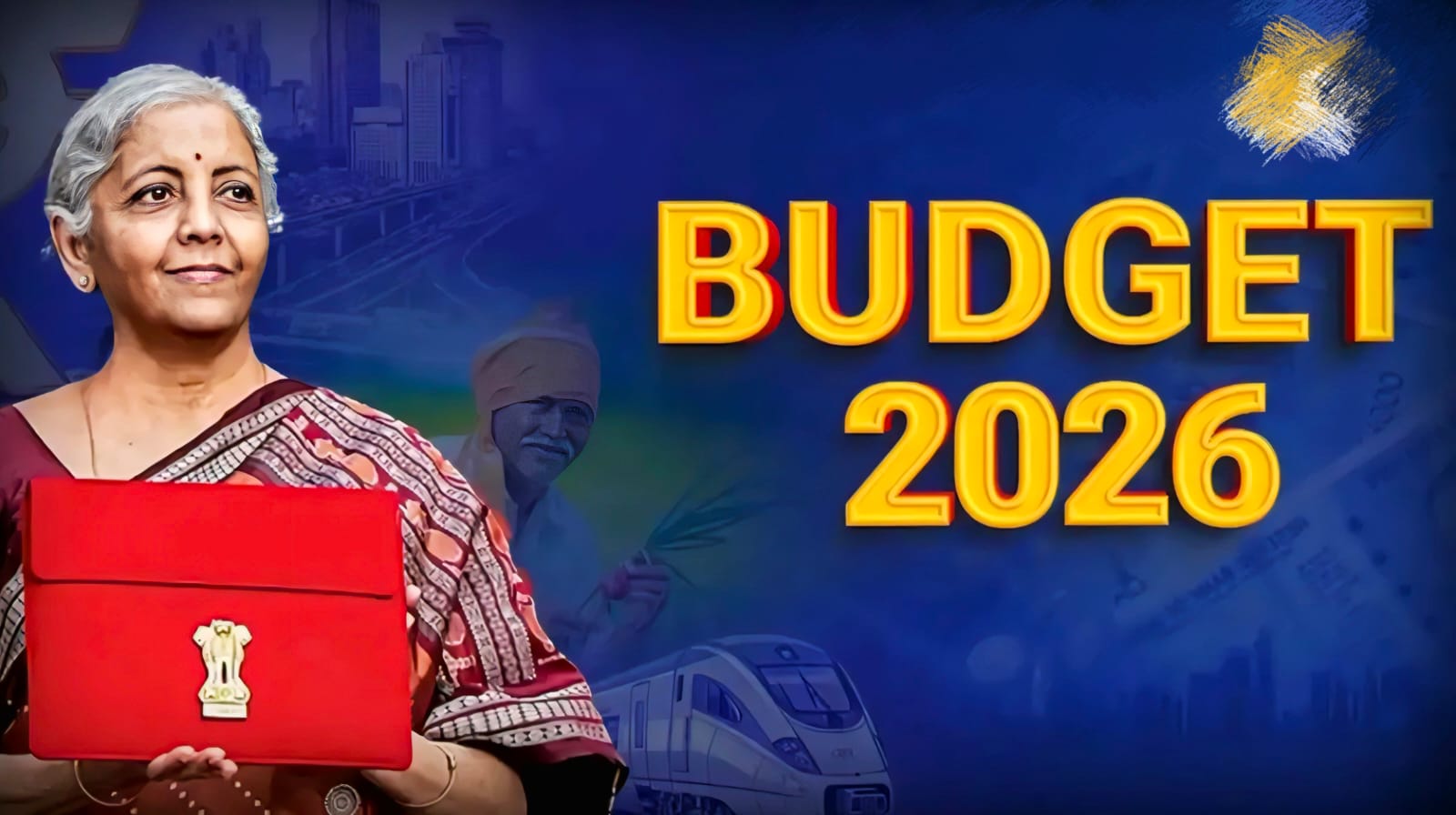
On 1 February 2026, Finance Minister Nirmala Sitharaman presented the Union Budget 2026–27 in the Parliament of India, marking her ninth consecutive budget presentation, a historical milestone. This annual financial statement outlines the government’s revenue and expenditure plan for the coming fiscal year and sets the strategic economic direction amid global uncertainties.
Budget 2026 Context and Objectives
In her speech, Sitharaman articulated the Budget’s framework around three central “kartavyas” (duties) reflecting the government’s priorities for accelerating economic growth, fulfilling aspirations of citizens, and ensuring inclusive development across every region and sector. These foundational priorities aim to reinforce India’s transition towards a more resilient and competitive economy in the decade leading to Viksit Bharat 2047.
Highlights from Finance Minister Nirmala Sitharaman’s Budget Speech
1. Policy Vision and Economic Priorities
Sitharaman emphasized that the Budget is designed to maintain growth momentum, even as global trade dynamics become volatile and technological transformations reshape industries. She reiterated the government’s commitment to structural reforms, sustained fiscal discipline, and proactive public investment to strengthen domestic manufacturing, energy security, and supply chain resilience.
Key statements from the speech included:
- “Today, we face an external environment in which trade and multilateralism are impaired…”
- “We have pursued far-reaching structural reforms… fiscal prudence and monetary stability are our anchors.”
- “Our kartavya is to ensure that every family, community, and sector has access to amenities and opportunities.”
These remarks frame the Budget’s broader thrust on facilitation of economic growth, social inclusion, and nation-wide access to opportunities.
Major Budget Announcements and Sectoral Reforms
2. Record Capital Expenditure and Infrastructure Push
The budget increased public capital expenditure to ₹12.2 lakh crore (approximately 4.4% of GDP), the highest ever allocation targeted at boosting infrastructure development across strategic corridors, ports, and transportation networks. This capex focus underlines the government’s belief in infrastructure as a catalyst for economic activity and employment generation.
Areas receiving emphasis include:
- High-speed rail initiatives and enhanced freight corridors.
- Dedicated rare earth magnet corridors in key states to reduce import dependencies and build manufacturing capacity.
3. Income Tax and Compliance Reforms
A major focus of the Budget was simplifying the tax regime:
- The Income Tax Act, 2025 will come into force from 1 April 2026, streamlining tax rules and improving compliance ease.
- Tax forms have been redesigned to be more taxpayer-friendly, reducing compliance burdens.
- Rationalisation of TDS and TCS rules for example, TCS thresholds for education remittances were increased.
- Resident tax changes also include rationalisation of penalties and integrated assessment procedures.
Although there were no major revisions to personal income tax slabs for FY27, the effort was clearly directed at enhancing clarity, reducing friction and supporting both individual taxpayers and businesses.
4. Digital India & IT Sector Boost
The Budget extended targeted incentives for the technology sector, positioning India as a preferred destination for digital infrastructure investment. A significant measure was a tax holiday until 2047 for foreign firms providing cloud services through Indian data centres, conditional on serving Indian customers through local reseller entities. This is expected to attract long-term foreign capital and strengthen the domestic data ecosystem.
5. Strategic Manufacturing and Innovation
The Budget reinforced manufacturing ambitions through several focused initiatives:
- India Semiconductor Mission 2.0 with enhanced funding of ₹40,000 crore to expand domestic semiconductor capabilities and R&D.
- BioPharma SHAKTI, aimed at building a global biopharmaceutical manufacturing hub.
- Infrastructure equipment schemes to deepen high-value industrial manufacturing.
These measures signal a long-term shift towards technological self-reliance and export competitiveness.
6. Support for MSMEs and Entrepreneurs
To nurture domestic enterprise growth, Sitharaman announced the creation of a dedicated ₹10,000 crore MSME Growth Fund, aimed at scaling up small and medium enterprises into future champions.
Additional relief measures and reduced trade barriers for e-commerce exporters also aim to empower small businesses.
7. Agricultural and Rural Development
The Budget introduced Bharat VISTAAR, a multilingual AI-based advisory tool for farmers to make data-driven decisions and improve productivity. Investments were also earmarked for agricultural infrastructure and rural upliftment programs.
Fiscal Framework and Growth Outlook
Despite intensifying global macro uncertainties, India’s fiscal targets remain grounded in prudence and predictability. The Budget projects a fiscal deficit of approximately 4.3% of GDP, with a focus on reducing debt ratios and sustaining macroeconomic stability. Growth projections remain robust, supported by elevated infrastructure investment and domestic consumption. (Wikipedia)
Moreover, the government maintained the states’ share in federal taxes at 41%, even while distributing finance commission grants to support broader development objectives across regions.
Key Themes and Strategic Impact
Infrastructure-Led Growth
The strong capex allocation underscores the Budget’s intent to make infrastructure the backbone of long-term economic growth.
Ease of Doing Business
Simplified tax structures and compliance reforms are designed to enhance India’s competitiveness as an investment destination.
Technology and Innovation Orientation
Through digital incentives and semiconductor support, the Budget signals an ambition to lead in future technology sectors.
Inclusive Development
By anchoring Budget priorities to inclusive access, the government aims to benefit households, MSMEs, farmers, and new entrepreneurs alike.
Overall to conclude The Union Budget 2026–27 presented by Finance Minister Nirmala Sitharaman reflects a balanced approach to economic expansion, strategic reforms, and inclusive growth. With record capital expenditure, structural tax reforms, focus on cutting-edge manufacturing, and measures to empower key sectors, this Budget outlines a roadmap that reinforces India’s resolve to meet both short-term challenges and long-term aspirations of a Viksit Bharat.