India vs Bangladesh 2026:
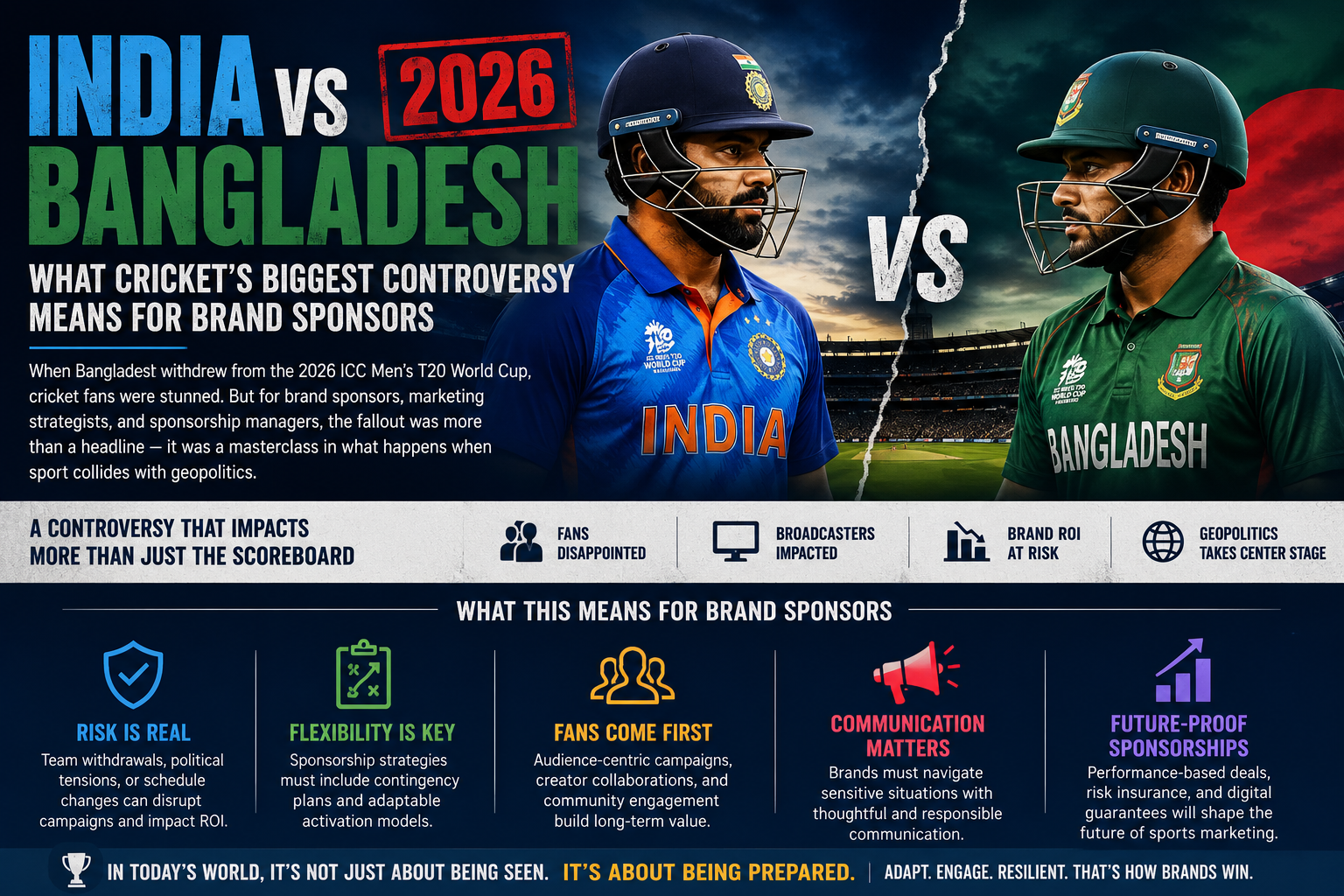
When Bangladesh withdrew from the 2026 ICC Men’s T20 World Cup, cricket fans were stunned. But for brand sponsors, marketing strategists, and sponsorship managers, the fallout was more than a headline — it was a masterclass in what happens when sport collides with geopolitics.
Here’s what every marketer needs to take away from one of cricket’s most dramatic episodes in recent memory.
Table of Contents
What Actually Happened?
The short version: Bangladesh was set to play all four of their 2026 T20 World Cup group-stage matches in India. Diplomatic tensions between the two nations triggered in part by the abrupt removal of Bangladeshi fast bowler Mustafizur Rahman from the IPL franchise Kolkata Knight Riders led the Bangladesh Cricket Board (BCB) to request their fixtures be moved to Sri Lanka.
The ICC refused. Bangladesh refused to back down. The ICC replaced them with Scotland.
Just like that, a nation that had featured in every single T20 World Cup since 2007 was out — not due to performance, but politics. India went on to win the tournament by defeating New Zealand in the final, with the bilateral tour between the two sides now pushed to September 2026.
What’s rarely discussed, though, is what this meant for the brands caught in the middle.
The Brand Sponsorship Stakes
Cricket sponsorship is serious money. The T20 World Cup attracts billions in viewership across South Asia, and the India-Bangladesh rivalry specifically commands massive attention from advertisers targeting both markets simultaneously — consumer goods, telecom, fintech, and sportswear brands in particular.
When Bangladesh walked out, sponsors who had built campaign assets around IND vs BAN matchups were left holding unusable creative. Regional campaigns targeting Bangladeshi diaspora audiences in India became instantly irrelevant. Co-branding activations between Indian and Bangladeshi brands had to be shelved entirely.
What most brands didn’t have? A geopolitical risk clause in their sponsorship contracts.
This is the blind spot in cricket marketing that the 2026 controversy exposed in full view.
What Marketers Can Learn
1. Geopolitical risk is now a sponsorship variable. The Pakistan-India arrangement of playing in neutral venues is well-documented. The Bangladesh withdrawal was not on any brand’s radar going into 2026. Smart sponsorship teams need to model political risk scenarios the same way they model weather or stadium logistics.
2. Modular campaign assets are non-negotiable. Brands that built team-agnostic creative — around the tournament rather than a specific bilateral fixture — were far better positioned to pivot. If your entire campaign hinges on one match, one player, or one team making it through, you’ve built fragility into your marketing plan.
3. Crisis communication speed matters. Brands associated with Bangladesh cricket had hours — not days — to decide how to respond publicly. The ones who stayed silent too long were assumed to be endorsing or ignoring the controversy. The ones who communicated clearly and quickly protected their equity.
4. The bilateral series opportunity in September 2026. India’s tour of Bangladesh (three ODIs + three T20Is, September 1–13, 2026) is now arguably the most emotionally charged bilateral cricket series of the year. For brands with a presence in either market, this is a high-attention window. The narrative writes itself a reunion after months of tension, on Bangladeshi soil, for the first-ever bilateral T20I series between the two nations on that ground. That’s not just sport; that’s a story.
Key Takeaw
- The 2026 T20 World Cup Bangladesh withdrawal left brand sponsors exposed due to lack of geopolitical risk planning
- Modular, team-agnostic creative assets are essential in today’s cricket sponsorship environment
- The India tour of Bangladesh in September 2026 is a major brand opportunity — with a built-in human interest narrative
- Sponsorship contracts need crisis and withdrawal clauses as standard, not optional
- In cricket marketing, the off-field story is increasingly as powerful as the on-field one
Final Thoughts
The India vs Bangladesh cricket story of 2026 isn’t just a diplomatic saga — it’s a case study in modern sports marketing risk. The brands that navigate it best won’t be the ones who react fastest. They’ll be the ones who had a plan before the controversy started.
And right now, the September 2026 bilateral series is the second chance no one expected. Are your campaigns ready for it?
For more insights on sports marketing, brand strategy, and the business of cricket — visit ThinkBossMedia.com